At World Tour Golf Links, golfers have the opportunity to experience holes inspired by some of the most recognizable designs in golf. From Augusta National and St. Andrews to Pinehurst and Bay Hill, the Myrtle Beach course brings elements of legendary layouts together in one memorable setting.
But appreciating the inspiration behind these holes is one thing. Playing them successfully is another.
Water hazards, challenging approach shots and demanding tee shots can quickly turn a promising round into a test of patience.
So, which holes present the greatest challenge?
We caught up with Brad Crumling, PGA General Manager at World Tour Golf Links, to get his take on the four toughest holes on the course, what makes them difficult and the mistakes golfers should try to avoid.
Here’s his countdown, starting with No. 4.
No. 4: Open Nine, 5th Hole | Par Five – Inspired by English Turn No. 15
An island-green par 5 presents an interesting decision for golfers, especially those with enough distance to consider reaching the green in two shots.
That’s precisely what makes the fifth hole on World Tour’s Open Nine such a challenge.
Inspired by the 15th hole at English Turn, this par 5 features a green completely surrounded by water, forcing golfers to weigh the potential reward against the consequences of a poorly executed shot.
Longer hitters may be tempted to take an aggressive approach, but laying up doesn’t necessarily eliminate the difficulty.
As Crumling explains, the layup itself is challenging, and even a successful one leaves a short wedge shot into an island green with little room for error.
The trouble can begin much earlier, too.
With water threatening the right side off the tee, golfers often compensate by aiming left. Unfortunately, two fairway bunkers guard the landing area on that side.
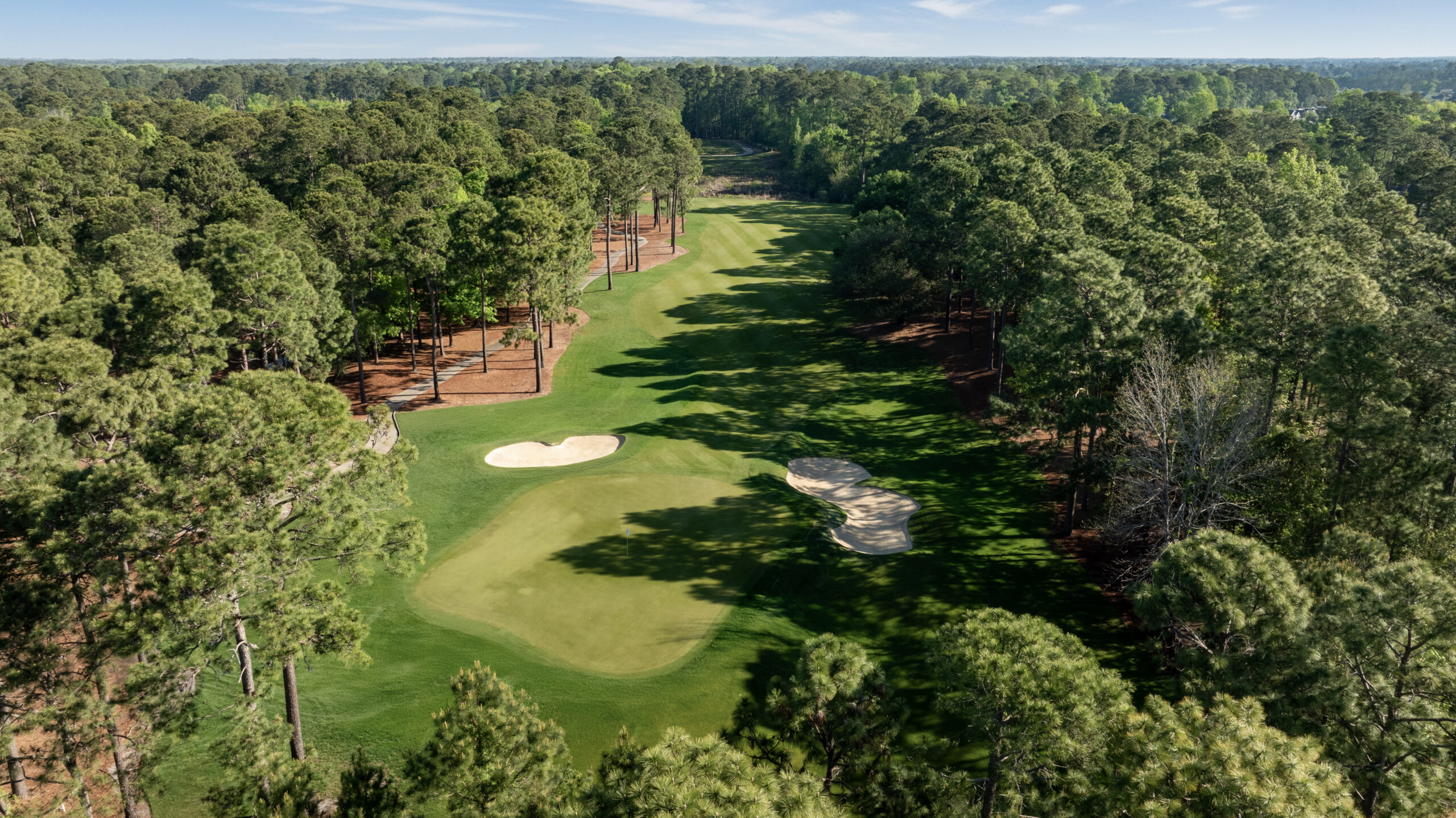
Brad’s advice: Don’t let the water on the right dictate an overly cautious tee shot to the left. Finding the fairway is important, and golfers should carefully consider their options before deciding whether to attack the island green or lay up. (Top photo)
No. 3: Championship Nine, 4th Hole | Par Four – Inspired by Augusta National No. 11
Few holes in golf are as recognizable as the 11th at Augusta National, and World Tour’s Championship Nine features a hole inspired by that famous design.
For Crumling, the fourth hole on the Championship Nine ranks as the third most difficult at World Tour, largely because of the demands it places on golfers from tee to green.
The approach shot is particularly intimidating.
Golfers face a long, narrow putting surface guarded by water along the left side, leaving little margin for a poorly struck or misdirected approach.
But Crumling emphasizes that the trouble can begin with the tee shot.
Missing left of the fairway is especially dangerous because the ground slopes sharply downhill toward the hazard. A shot that initially appears manageable can quickly become a much bigger problem.
Brad’s advice: Avoid the left side off the tee. Positioning is critical, and golfers who find the fairway give themselves a better opportunity to navigate the demanding approach.
No. 2: Open Nine, 4th Hole | Par Four – Inspired by Colonial Country Club No. 12
Sometimes the most difficult holes aren’t necessarily the longest. They’re the ones that make golfers uncomfortable regardless of where they aim.
That’s the challenge awaiting players on the fourth hole of World Tour’s Open Nine, inspired by the 12th at Colonial Country Club.
Crumling ranks this hole as his second toughest, despite its designation as the No. 5 handicap hole on the course.
Water stretches along the entire right side, creating an obvious threat from the tee.
Naturally, many golfers respond by favoring the left side of the fairway. But that approach comes with its own risk.
Shots that miss left can catch the slope and bounce even farther in that direction, potentially finding a heavily wooded area.
It’s a hole that punishes golfers who overcompensate for the most visible hazard.
Brad’s advice: Don’t automatically aim well left simply to avoid the water. Understanding how the fairway slopes is important, and a controlled tee shot gives golfers their best opportunity to stay out of trouble.
No. 1: Championship Nine, 9th Hole | Par Four – Inspired by Bay Hill No. 11
Every golfer has that one hole that seems to cause trouble, regardless of how many times they’ve played it.
For Crumling, that hole is No. 9 on World Tour’s Championship Nine.
Inspired by the 11th hole at Bay Hill in Orlando, Florida, this hole earns the top spot on his list based on personal experience.
“The hole that always seems to come up and bite me is number nine on the Championship Nine,” Crumling says.
And according to Crumling, much of the trouble begins with the tee shot.
Fairway bunkers along the right side present a significant challenge. Finding one of them can effectively eliminate any realistic opportunity to reach the green in two shots, putting golfers in a difficult position early in the hole.
It’s the kind of mistake that can quickly turn a manageable hole into a much bigger number on the scorecard.
Brad’s advice: Avoid the fairway bunkers on the right. Keeping your tee shot out of the sand is critical to maintaining an opportunity to reach the green in two and avoiding unnecessary trouble.
More to Experience at World Tour Golf Links
World Tour Golf Links offers golfers a distinctive experience, with holes inspired by some of the most recognized courses in the game. As Crumling’s selections show, those designs also present plenty of challenges, regardless of a golfer’s skill level.
Beyond the course, The Bridge at World Tour features a Toptracer driving range where golfers can practice, compete in interactive games or enjoy time with friends before or after their round.