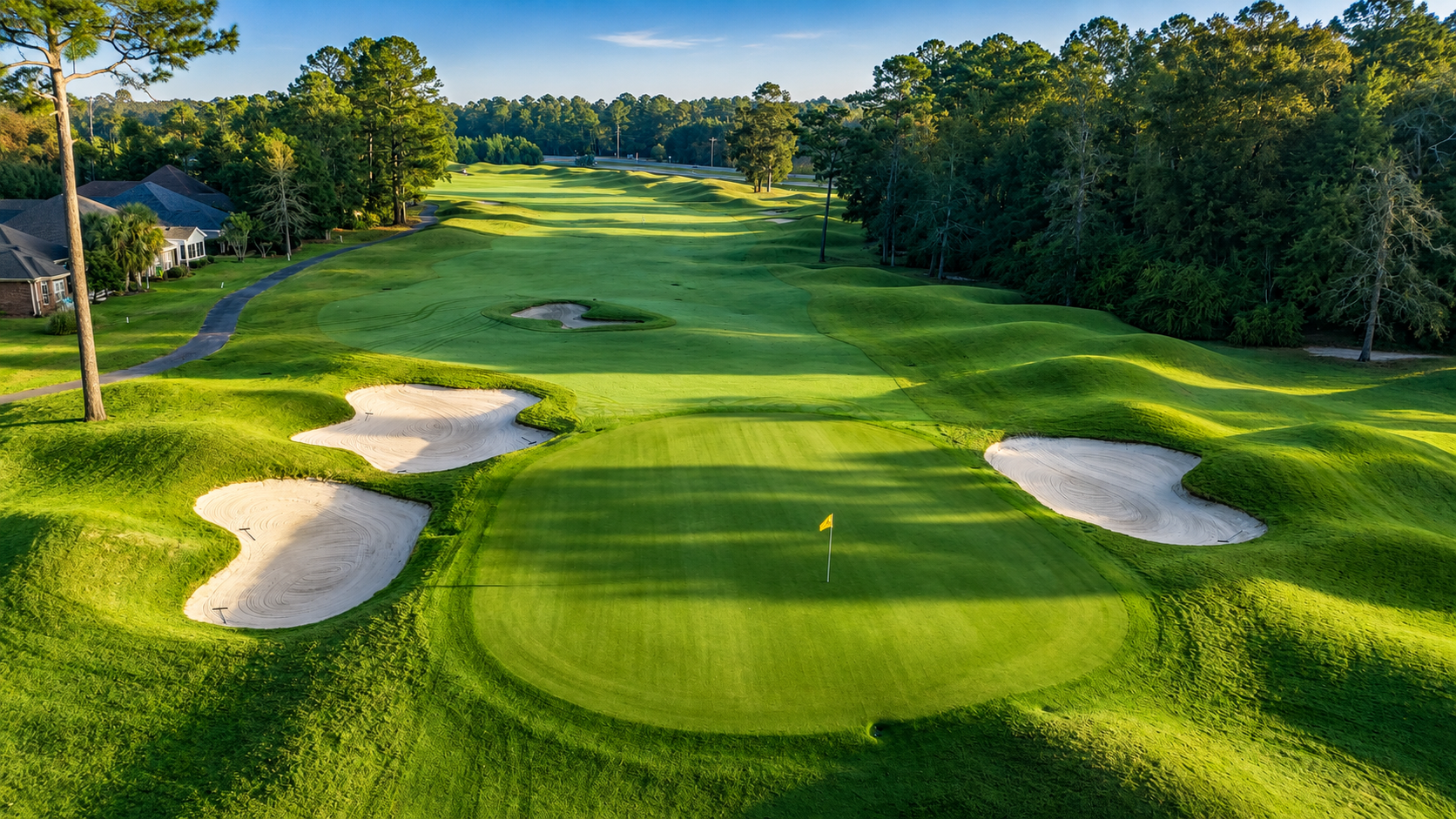
A little over five years after having my eyes opened to the technology of Toptracer, the next generation is blowing the doors off what I previously knew.
And it’s right here in Myrtle Beach.
The Bridge, an aptly named driving range fueled by Toptracer’s newest rendition, recently opened at World Tour Golf Links. It’s a 16-bay facility mere yards from the clubhouse and available to everyone.
Point blank, it further changes the name of the practice game.
The Bridge isn’t simply a driving range. Nor is it only a different version of what we’ve come to know (and most people love) about TopGolf, the well-known coopted partner. This newest rendition is, in every sense of its existence, cutting down on the the divide between practice, competition and the full-fledged version of the game.
Days after the facility went live, the positive reviews were already finding their way back to course management.
“[Early participants] really like the practice aspect of it,” said Shane Peters, World Tour’s Head Golf Professional. “They can look at their numbers and they really like the ability to do the certain games. If you’re able to play St. Andrews or Pebble Beach, places that people normally can’t get on, it’s cool to come out here and they can see where they hit it if they were able to play it.”
NUTS AND BOLTS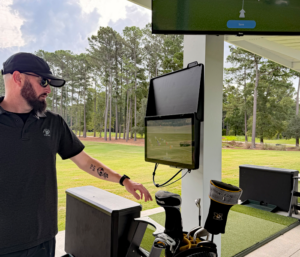
If you’ve watched a live golf broadcast in recent years, chances are you’ve been exposed to the Toptracer effect, even if you didn’t know it by name. The PGA Tour and European TOUR (now the DP World Tour) both began using it back in 2006, the same year the formerly named “ProTracer” company worked out enough of the kinks to put it all into action.
It immediately brought golf broadcasts into a more fan-friendly environment, as trying to spot a white golf ball on a television screen isn’t always the easiest of tasks.
But how would that translate on a smaller scale?
Turns out, the technology may be even more beneficial.
A system of cameras at The Bridge track each shot. The data is immediately sent to two screens, one viewable by the player and another by any partners or onlookers set just behind the hitting bay. Total distance, carry (and flat carry, since The Bridge is slightly elevated), ball speed, launch angle, curve, apex, landing angle, hang time and proximity to target are all included on every stroke.
That data is pulled from three video/camera systems mounted to either corner and the front of the overhang. Knowing that in advance, I did my best to trick the system. By that, of course, I mean that I shanked a few shots and then waited for bad readings.
Every ball was tracked with the exception of the ones I plunked so far off the course I felt the need to yell “fore!” and the system registered as such.
When I wasn’t risking the lives of imaginary folks in the gallery, I quickly discovered the data was coming even faster than my past Toptracer experience, and with even more detail. Aspects like the flat carry distances were vital, since not every tee box is elevated.
That brings us to the real fun of The Bridge.
DIVERSITY IN ACTION
Players have options galore when it comes to how to best use the technology.
After a quick free-range warm up where the system simply tracked any old shot, I moved into an “approach” game. Essentially it broke down where the system would pick a target for me within a specific range – I picked something to allow me to utilize my mid irons – and had one shot at a new target for 18 straight ball strikes.
The data collected was immediately able to be put to use, as my range was small enough where I was only using four different clubs. Via the Toptracer app, you have the ability to fine tune that data even more to even more finite yardage ranges.
Here’s an example of how it could be applied in the real world: If you normally hit your 6 iron between 160-180 yards, you could pare down your shots and see if you need more work at that distance.
It’s so much more involved than simply heading out to a range and hitting stroke after stroke after stroke and trying to keep in mind what is and isn’t working. Or relying on your memory to do the work for you, something that’s increasingly difficult the more balls you strike.
Up and down the choices are plenty of other ways to make the technology work for you beyond simply the entertainment value.
But outside of the range junkies among us lies the added value of Toptracer.
Some of the available games include playing a full 18 on a number of the world’s most notable courses. I “played” the front nine at St. Andrews in a shade under 15 minutes, for instance. I’ve done that before, too, but the current version was even more true in terms of hazards and carries and even the application of the true distances.
It was around the end of my nine holes at St. Andrews when I turned back to my bag and remembered I had a clear line of site to another “St. Andrews” hole.
Indeed, I believe the thought process on where to park The Bridge will work just fine.
THE HERE AND NOW… AND THE FUTURE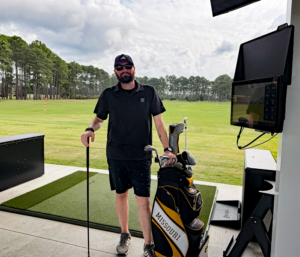
World Tour is absolutely the perfect spot for The Bridge.
Roughly seven before the first generation of Toptracer was up to snuff and put into action, the course was getting ready to open and faced mixed and somewhat uninformed reviews. Before the first tee times, traditionalists didn’t love the idea of a replica course.
Once players began seeing it for itself, even the most ardent traditionalists started changing their tune.
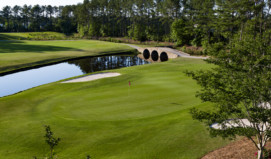
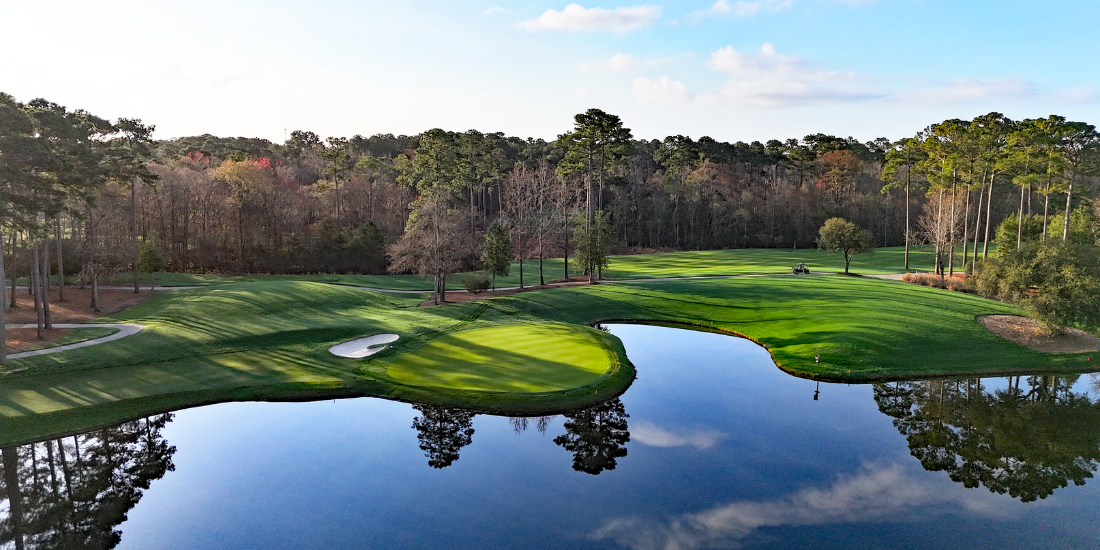
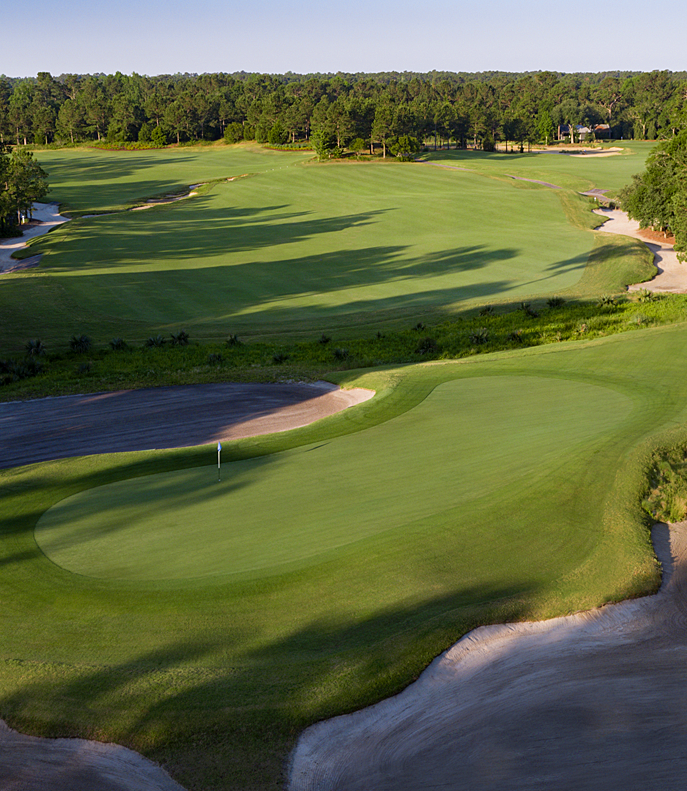
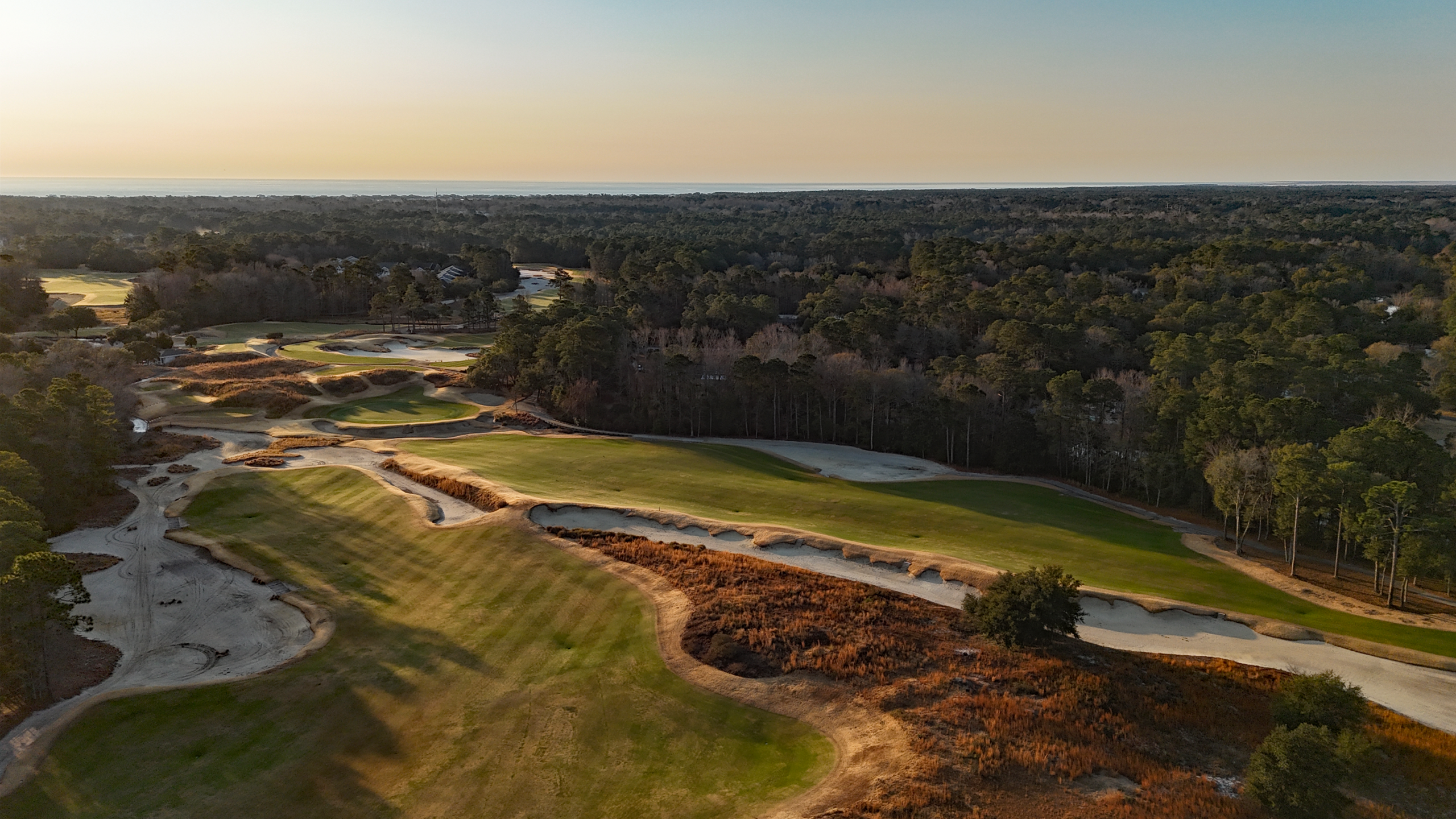
The patterns for the specific holes weren’t exact, of course, but they provided that taste of St. Andrews on No. 1, Pinehurst No. 2 immediately after and TPC Sawgrass, all within the first three holes. The big names keep going right on through the finisher.
Flash forward to the opening of The Bridge, and the replica course that’s often sending out up to 224 players per day has another carrot to dangle and is capable of changing even more minds.
“I think it’ll be good. People want to play those higher end courses. You get a little taste of it out here on the range or on the course. You can see it for yourself,” Peters said. “It will work hand in hand.”
Anyone with a tee time will receive sessions at The Bridge, and Peters recommends those players arrive 45-60 minutes before their tee times in order to really absorb the opportunity (yes, they can still use the traditional range if they so choose).
Anyone without a tee time but just wants to check out the technology can do that, too. Bays are reserved in 30-minute blocks, and you’ll quickly find it’s roughly the same price as a couple buckets of balls at a typical range, with a decreasing per-person rate for groups.
That last part will be the next evolution of The Bridge.
Participants are currently subject to waiting for periodic drink cart visits or making the quick walk inside the clubhouse. That won’t always be the case. Preliminary plans for a food and beverage truck and/or free-standing snack bar are in the works.
What that will immediately do is create even more of a demand, as players utilize the bays for longer stretches of time and/or trips to World Tour specifically for the high-tech range.
That’s in the future, though. For now, I’m more than good with the futuristic technology The Bridge already provides. More importantly, I’m positive you will be, too.
THE BRIDGE, AT A GLANCE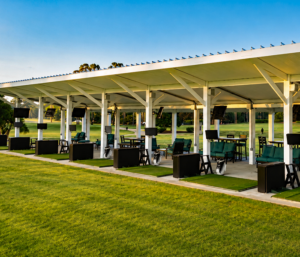
Where: World Tour Golf Links (2000 World Tour Blvd, Myrtle Beach)
Hours: Course opening to closure, seven days a week
Cost: $15 per person for 30 minute windows; $5 for each additional person
On the web: TopTracerMyrtleBeach.com
Photos for this feature from MyrtleBeachGolfTrips Instagram Account