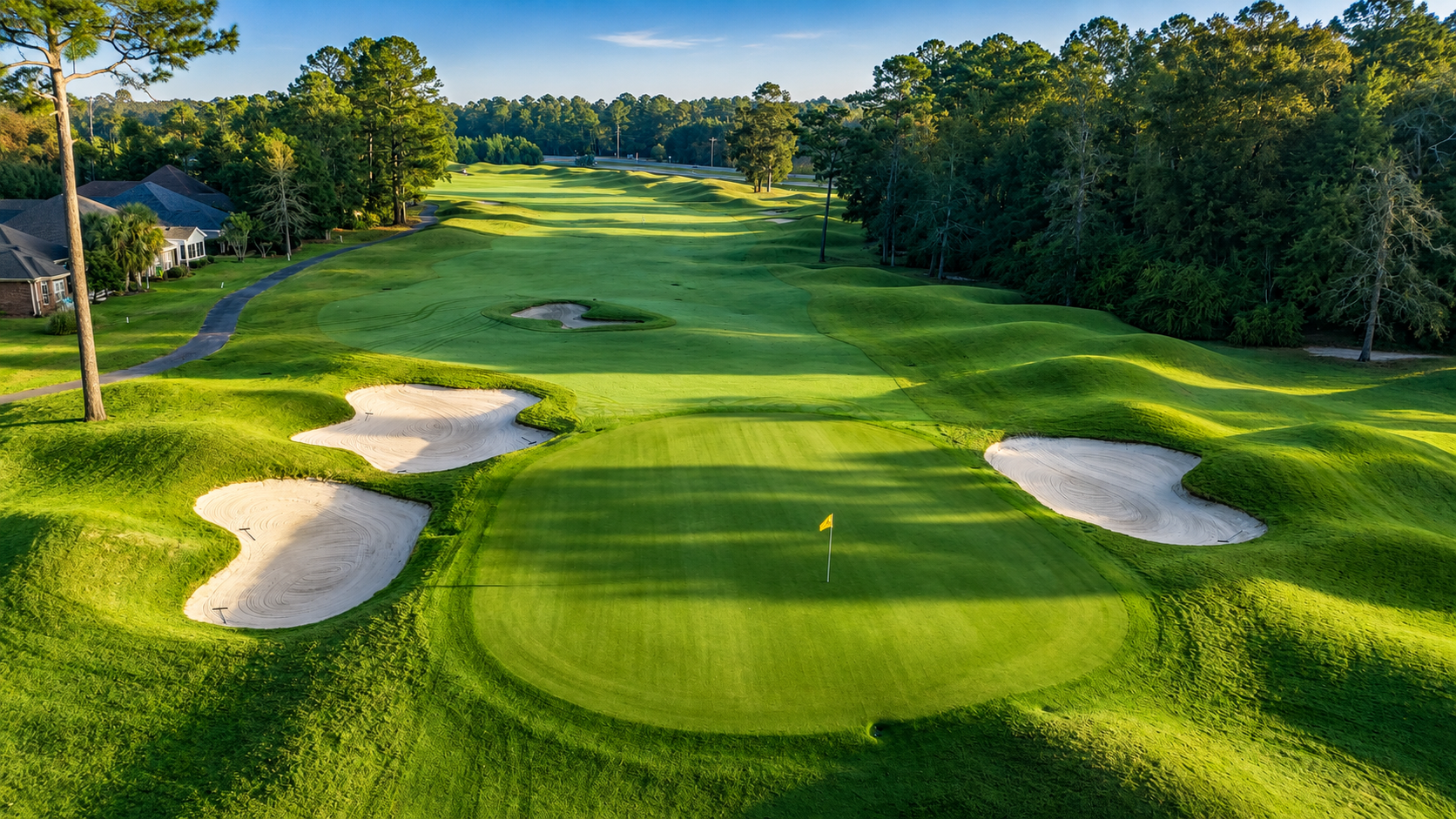
Burning Ridge Golf Club is a layout that fills out a golf package without being one people clamor to play, but that doesn’t mean you won’t enjoy a round on the Gene Hamm design, which delivers an old-school test.
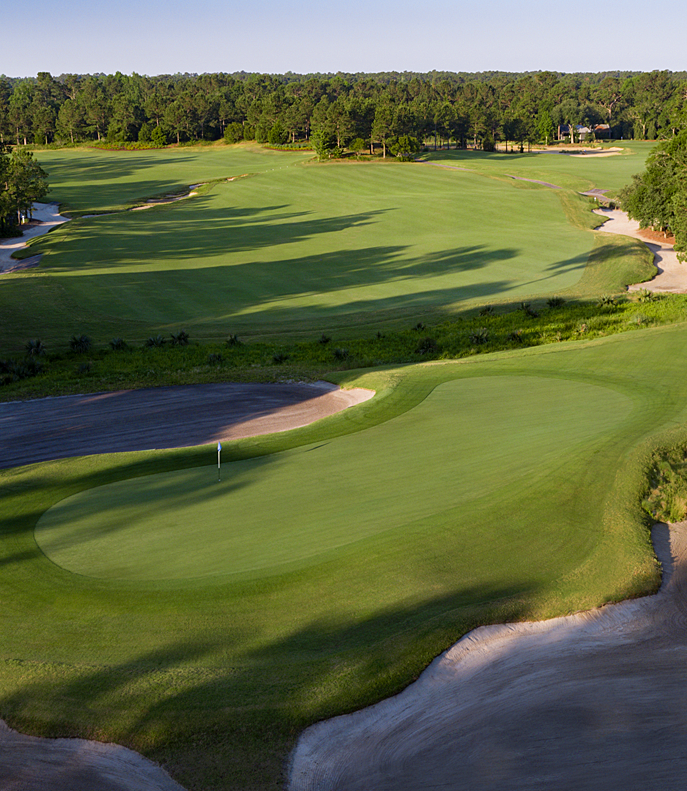
Unlike most modern layouts, nearly all of which feature expansive fairways and greens big enough to build a 7-Eleven on, Burning Ridge is a shotmaker’s delight, rewarding precision approach play at least as much as raw power off the tee. The fairways are tree-lined without being suffocating, and the greens are among the Grand Strand’s smallest, but that’s part of the course’s charm.
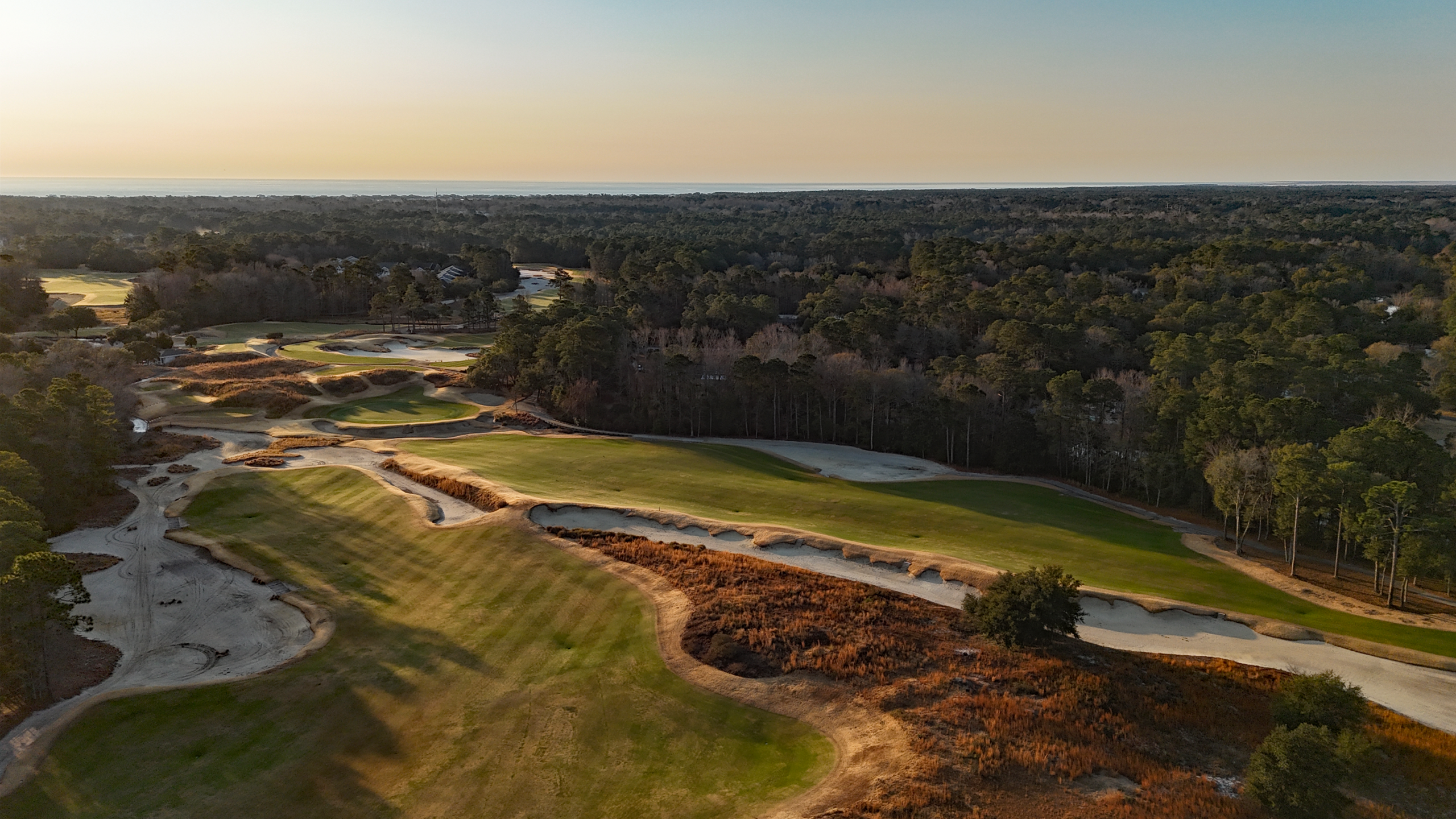
As group leaders turn their attention to the spring of 2026, they can do so knowing Burning Ridge is in prime condition. The venerable layout battled winter kill on its fairways during the spring and summer of 2025, thanks to exceptionally harsh weather in the year’s opening months, but Burning Ridge rebounded in a big way.
“Thanks to a lot of hard work by our superintendent, Tim Lowe, and his staff, the fairways have bounced back, and the course from tee to green is in outstanding condition,” General Manager Eddie Overstreet said. “One of our members who plays five days a week said that the 8th fairway, which was one of our hardest hit ones, is better now than it was before the problem.”
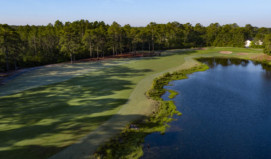
Burning Ridge’s front nine is the easier of the two sides, playing nearly 250 yards shorter from the white tees (2,987 yards), but the opening par-5, featuring water in front of the green, demands a nervy approach. Play the first as a three-shot hole and then try to score on a nine where the longest par-4 is just 367 yards (all distances from white tees), because things get significantly more difficult after you make the turn.
 After a series of shortish par 4s to begin the day, No. 10 plays 386 yards, and No. 11 is a 427-yard beast with water lurking on the right off the tee. You have to pound driver but there isn’t a lot of room for error. Bogey isn’t a bad score here.
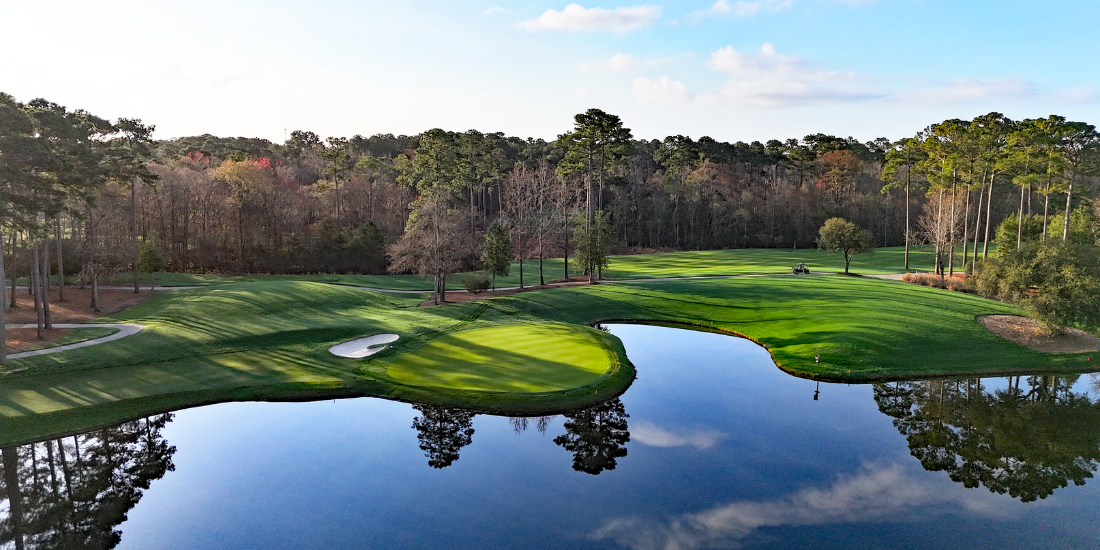
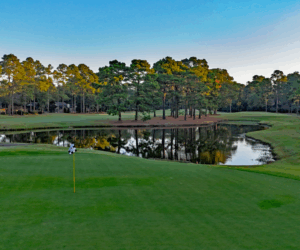
If No. 11 isn’t Burning Ridge’s toughest test, then No. 12 (pictured left), a 200-yard par-3, is. A pond that fronts the green demands a 170-yard carry with limited room to miss left, making this tee shot Burning Ridge’s toughest. Survive that trio of holes, and the course relents.
By the time you arrive on the 15th and 16th tees, it’s time to play aggressively in search of a birdie. No. 15 is a 457-yard par-5, while No. 16 is a 346-yard par-4 that is begging you to make three.
Collectively, Burning Ridge’s par-3s are among the Myrtle Beach area’s most challenging, highlighted by No. 12 and then the 17th, a 164-yard one-shotter that plays to a small green with sand on the left and water on the right.
After the 546-yard first hole, the remaining par 5s are gettable, but no matter the hole you are playing, success at Burning Ridge will hinge on your iron play. The course’s greens are small and provide plenty of undulation, so hitting your spots on the approach is vital on a layout that should guarantee a good time and a different type of test in the spring of 2026.
Photos for this feature from MyrtleBeachGolfTrips Instagram Account