Pete Dye didn’t build golf courses golfers were likely to forget.
His designs could intimidate from the tee, tempt players into taking on more than they should and make a relatively straightforward shot suddenly feel anything but comfortable. Railroad ties, sprawling bunkers, unusual angles and a healthy dose of visual deception became hallmarks of a design career that produced some of America’s most recognizable courses.
Myrtle Beach golfers have an opportunity to experience that philosophy in two distinctly different ways.
At Barefoot Resort’s Dye Course, Pete Dye was the architect, creating a layout that opened in 2000 and stretches to 7,343 yards. At Prestwick Country Club, Pete worked alongside his son, P.B. Dye, on a course that can play 7,086 yards.
They share the Dye name and plenty of the family’s architectural DNA.
Beyond that, these are two very different rounds of golf.
Barefoot: The Full Pete Dye Experience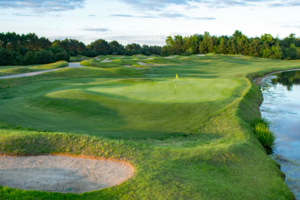
There isn’t much mystery about whose golf course you’re playing at Barefoot.
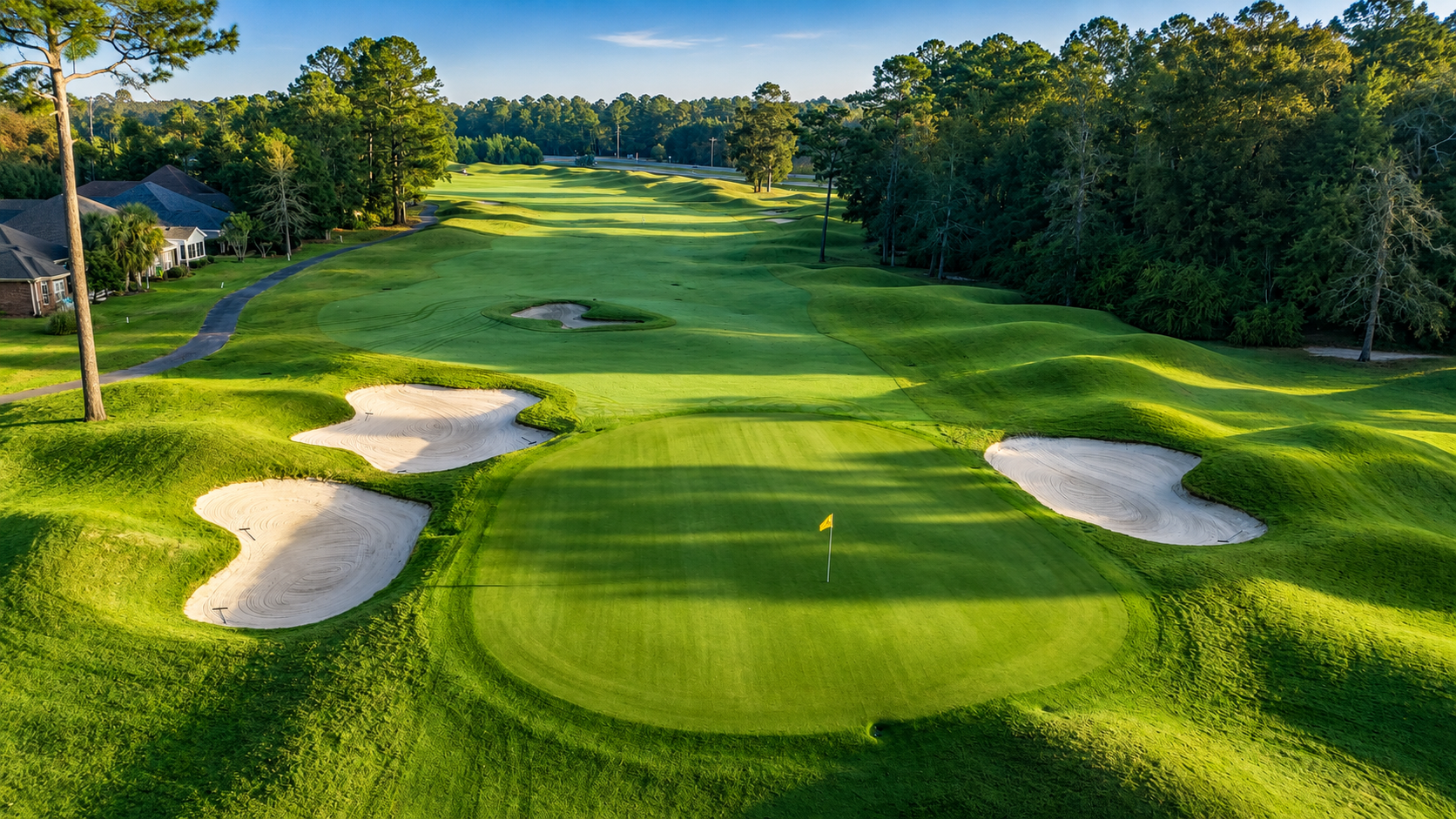
Waste areas, mounding, deep bunkers, railroad-tie accents and intimidating sightlines make the Dye Course one of Myrtle Beach’s most visually distinctive layouts. From the beginning, golfers are asked to process not only the shot in front of them but everything Dye wants them to think might be in the way.
That’s an important distinction.
The Dye Course has a reputation for being difficult, and deservedly so from the back tees, but recreational players shouldn’t confuse intimidation with impossibility. From the approximately 6,000-yard tees, the course begins with a collection of manageable holes, and there is more room off the tee than appearances sometimes suggest.
That’s part of the fun.
Dye was a master at making golfers uncomfortable before they ever swung the club. A bunker might appear closer than it really is. A tee box can make the preferred line difficult to identify. Mounds and waste areas frame landing zones in ways that make them look smaller.
The golfer who trusts the yardage and commits to a target will often discover there was more room available than initially appeared.
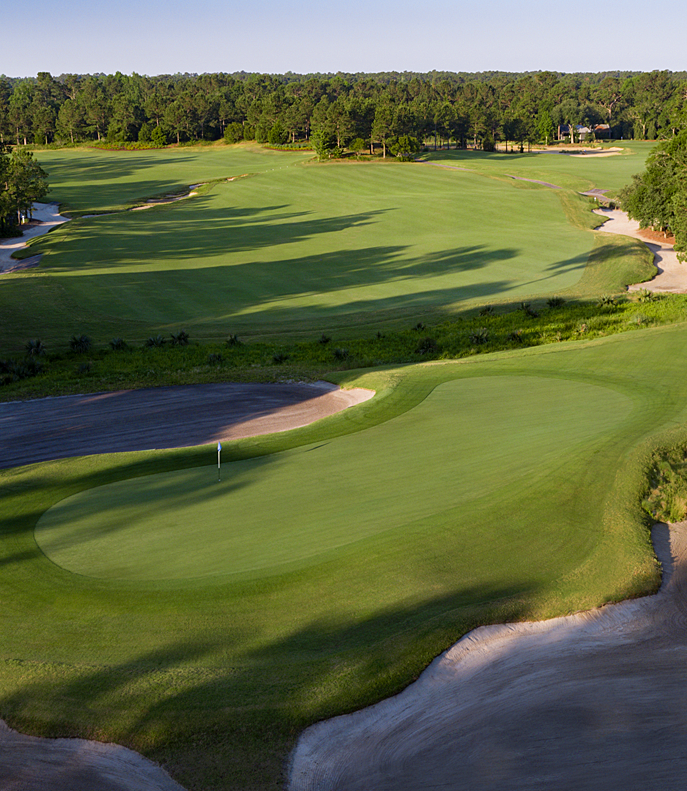
The challenge builds as the round progresses, particularly beginning at No. 14. From there, the Dye Course provides a demanding closing stretch, although the par-5 16th offers an opportunity to get a shot back.
It’s a finish that delivers exactly what many golfers came looking for: Pete Dye asking questions and demanding answers.
Prestwick: Dye DNA With a Different Personality
Drive roughly 20 miles south and the experience changes.
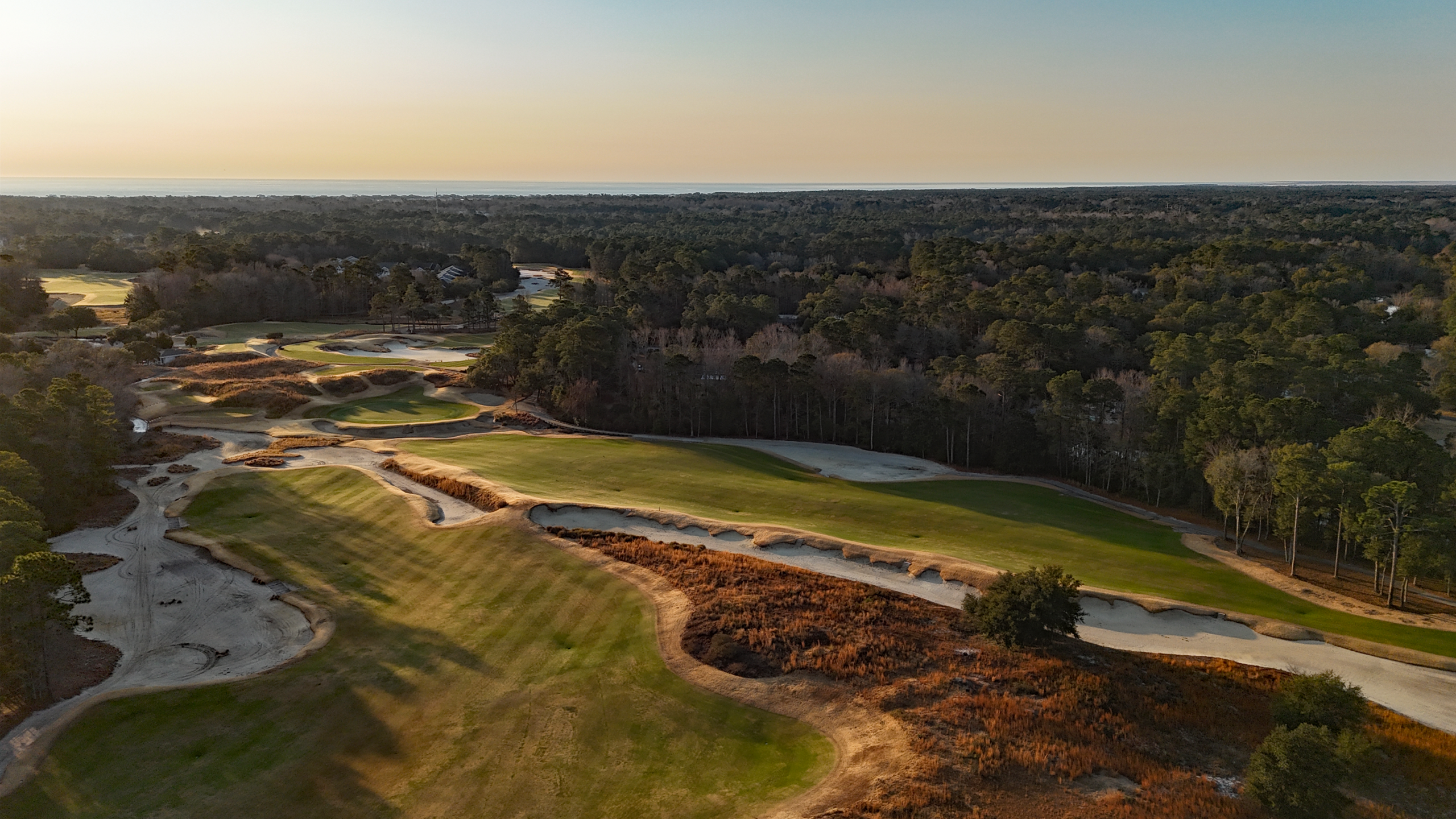
Prestwick Country Club has a personality all its own. Pete and P.B. Dye created a course that transitions from tree-lined corridors on the front nine into a more open, links-inspired feel on portions of the back. While it shares unmistakable Dye design characteristics with Barefoot, the way Prestwick challenges golfers is distinctly its own.
Where Barefoot often confronts golfers with visual intimidation, Prestwick’s difficulty has a way of revealing itself through the shots it demands.
Position matters.
Playing 6,347 yards from the white tees, 6,744 from the blues, and 7086 from the black tees, Prestwick puts a premium on driving the ball well. You can’t simply stand on every tee, pull driver and expect to overpower the course.
The opening hole provides an immediate example. The short par 4 has trees guarding one side and a waste area along the other, while the fairway narrows closer to the green. Less than driver can be the prudent play.
That type of decision-making is repeated throughout the round.
Prestwick also incorporates some unmistakable Dye features, including dune-like berms, bulkhead-protected greens and distinctive bunkering. But the course’s challenge is about more than architecture. Its proximity to the Atlantic means wind can become another variable, changing club selection and making an already demanding layout even more interesting.
Two Very Different Back-Nine Experiences
If you’re comparing the courses during the same Myrtle Beach golf trip, pay particular attention after making the turn.
The Dye Course at Barefoot begins turning up the pressure late in the round. The combination of visual deception, bunkering and increasingly demanding shots culminates in a closing stretch that reinforces the course’s reputation.
Prestwick’s back nine has a different rhythm, eventually building toward one of the most memorable three-hole finishes in Myrtle Beach.
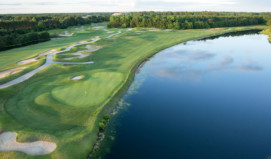
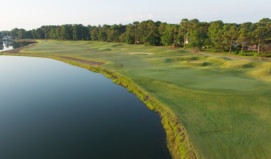
The par-3 16th brings water prominently into play. No. 17 is a demanding par 5 where trouble can turn one mistake into several. Then comes the par-4 18th, playing alongside water toward the clubhouse and providing one of Prestwick’s signature views.
Neither course allows you to coast home.
They just apply the pressure differently.
Don’t Overlook the Par 3s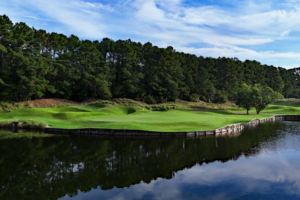
One of the best comparisons between the two courses comes on the par 3s.
Barefoot’s collection is visually imposing and among the most challenging on the Grand Strand. The most dramatic example may be No. 15, where an extraordinary collection of bunkers surrounds the challenge.
Prestwick takes a different approach.
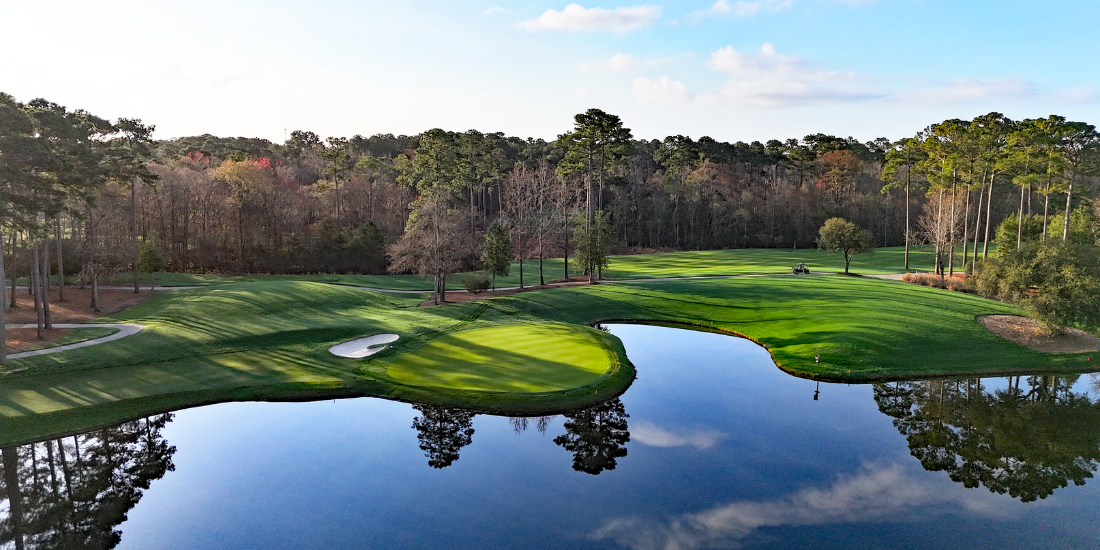
The fifth plays alongside a stream, the short 13th demands a full carry, and water adds considerably to the pressure at No. 16.
On both courses, reaching a par 3 and automatically writing down a routine three isn’t part of the program.
The Biggest Similarity? Decisions Have Consequences
The visual differences between Barefoot and Prestwick are significant, but the common thread becomes obvious once you play them.
Pete Dye wanted golfers to make decisions.
At Barefoot, those decisions are frequently influenced by what you see. The architecture can make a golfer question the target, club or line even when there is more room available than it appears.
Prestwick places more emphasis on positioning. Finding the proper side of the fairway, knowing when to throttle back off the tee and avoiding the wrong miss become critical to scoring.
Neither approach is especially forgiving of indecision.
But neither course is unfair, either.
Choose the proper tees, accept that a few holes are going to win, and both layouts become much more enjoyable.
If You Play Them Both, Here’s What to Watch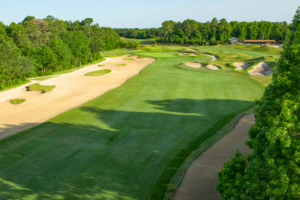
Playing Prestwick and the Dye Course during the same Myrtle Beach golf trip provides something more interesting than simply checking two highly regarded courses off the list.
It offers a chance to compare how the same architectural family can produce two very different experiences.
At Barefoot, watch how Pete Dye uses visual deception. Pay attention to how often the landing area looks tighter from the tee than it does once you reach your ball. Notice the railroad ties, waste areas, mounding and bunkers that make the course immediately recognizable as his work.
At Prestwick, focus on angles and position. Think about why one side of a fairway provides a better approach than the other. Notice how the course changes character as the round progresses and how Pete and P.B. Dye use water, bunkering and green complexes to make golfers consider the next shot before hitting the current one.
That’s what makes these courses such an interesting pairing.
You aren’t playing the same Dye golf course twice.
At Barefoot, Pete Dye often tries to convince you that a shot is harder than it really is.
At Prestwick, Pete and P.B. Dye have a habit of reminding you that the shot really is that important.
Either way, choose wisely.
(Photos from top bottom: Prestwick 18th, Dye Club 18th, Prestwick 13th, Dye Club 16th)