
These are dark days for golfers. With daylight slipping away and temperatures diving across much of the country, many players have already packed their clubs into the closet for the winter.
If you live in an area that makes it difficult to play in the winter months, that doesn’t mean you should also mothball your dreams of improvement. Just the opposite, in fact. Without a Saturday morning tee time or a $5 Nassau to concern yourself with, you can focus on how to improve, and there are ways to do it without being on the course.
As our friends in the Northeast and Midwest prepare for their winter hibernation, we consulted LPGA professional Meredith Kirk for three ways to keep your game sharp as you begin looking forward to your spring 2026 trip to Myrtle Beach.
Get in Shape
Most of us don’t associate physical fitness with good golf, but it makes a difference, especially as we get older. Spend the winter months improving your flexibility and core strength. A few yoga sessions or a simple stretching routine can do wonders for your range of motion, and stronger core muscles will stabilize your swing. You’ll feel better, gain distance, and avoid the fatigue that creeps in late in the round.
Play Indoors
One welcome bonus for cold-weather golfers has been the explosion of indoor golf. Whether it’s at a local club, simulator lounge, or even a large golf retailer, indoor simulators are everywhere. Use them to stay sharp and get feedback you can’t always get on the range, via Trackman.
“Take advantage of the technology,” Kirk said. “You can see your ball speed, launch angle, and path without the pressure of being on the course.”
Mirror Your Swing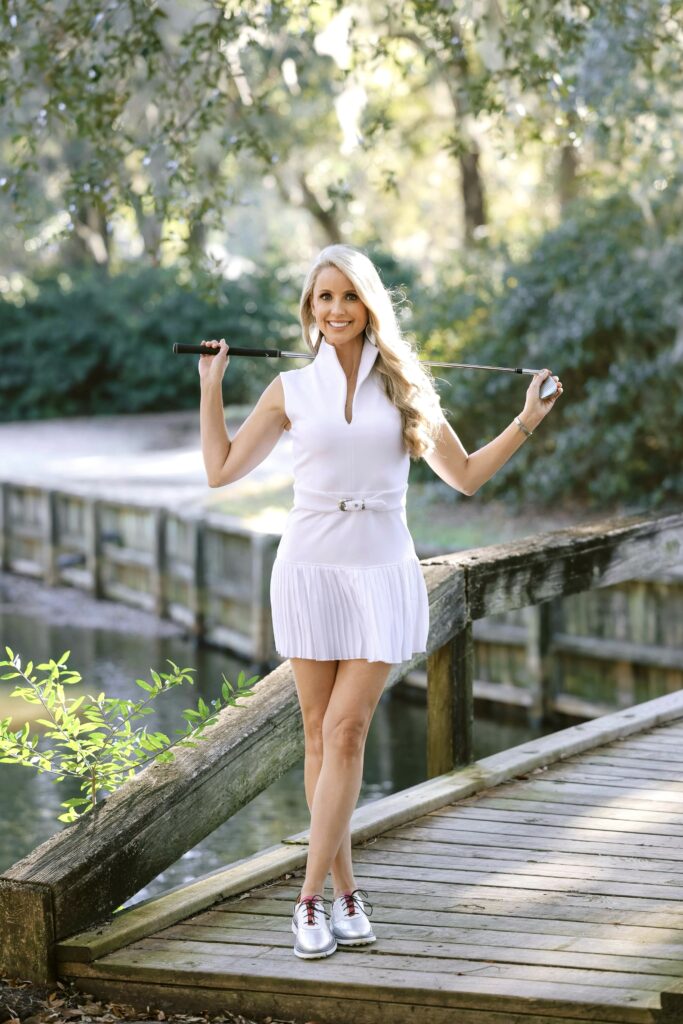
Even if you can’t get to a simulator, Kirk says the most powerful off-season practice tool might already be in your house – a mirror.
“You can simply motion out your golf swing in the warmth of your home,” she said. “Just spend 10 minutes a day doing it in slow motion, and that will build incredible muscle memory.”
According to Kirk, slow-motion rehearsal – moving at about one-quarter speed – helps the brain create new neural pathways and engrain correct motion.
“When you can see yourself making the move, you’re both the participant and the observer,” she said. “That combination helps the brain learn faster.”
Kirk recommends focusing on three fundamentals you can perfect indoors: aim, alignment, and takeaway. Mirror work provides instant feedback.
“If you get the takeaway right,” Kirk says, “you’ve already solved 70 percent of swing problems. You could come out of winter without hitting one ball and make solid strikes the first time you go back to the range.”
The Payoff
Winter doesn’t have to be a lost season. Mix in some stretching, simulator time, and slow-motion mirror work, and you’ll not only keep your swing from rusting, you might even return in the spring better than when you packed your clubs away.
Click Here to Get a Free Myrtle Beach Golf Trip Estimate