Pete Dye-designed golf courses have a reputation for challenging golfers, and Barefoot Resort’s Dye Course is no exception. Widely regarded as one of the more demanding layouts in the Myrtle Beach area, it’s a course that can look intimidating before you’ve even hit your first tee shot.
But after a recent round, we came away with a slightly different perspective.
While our golf directors are certainly familiar with the Dye Course, a couple of us from the Myrtle Beach Golf Trips marketing team recently had the opportunity to play it for the first time. And while the layout lived up to its reputation in some respects, there were also a few surprises along the way.
The weather forecast wasn’t exactly encouraging, calling for rain throughout the day. But as anyone who plays golf in Myrtle Beach knows, you don’t cancel a tee time just because the forecast looks questionable. Sure enough, we enjoyed an overcast fall afternoon without the rain that was supposed to be there. Another reminder that Myrtle Beach weather forecasts don’t always tell the whole story!
From the tee, the course was more forgiving than we anticipated. Around the greens? That’s an entirely different story.
A Manageable Yardage, But Don’t Let That Fool You
We played from the white tees, which measure 6,064 yards on the scorecard. At first glance, that might not sound particularly demanding, especially for a par-72 layout.
And in some ways, it wasn’t.
One of our biggest takeaways was just how playable many of the par-4s and par-5s were from those tees. Several fairways offered generous landing areas, and there were opportunities to attack a few of the par-5s without feeling like every shot needed to be perfect.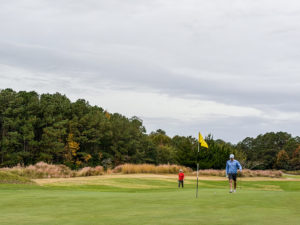
The course also rewards different shot shapes. Some holes favor a left-to-right ball flight, while others set up better for a draw. There’s no single way to navigate the layout, and that variety keeps things interesting throughout the round.
But don’t mistake manageable yardage for an easy golf course.
Much of the challenge comes after the tee shot, particularly when approaching the greens.
The Green Complexes Were Every Bit as Challenging as We Expected
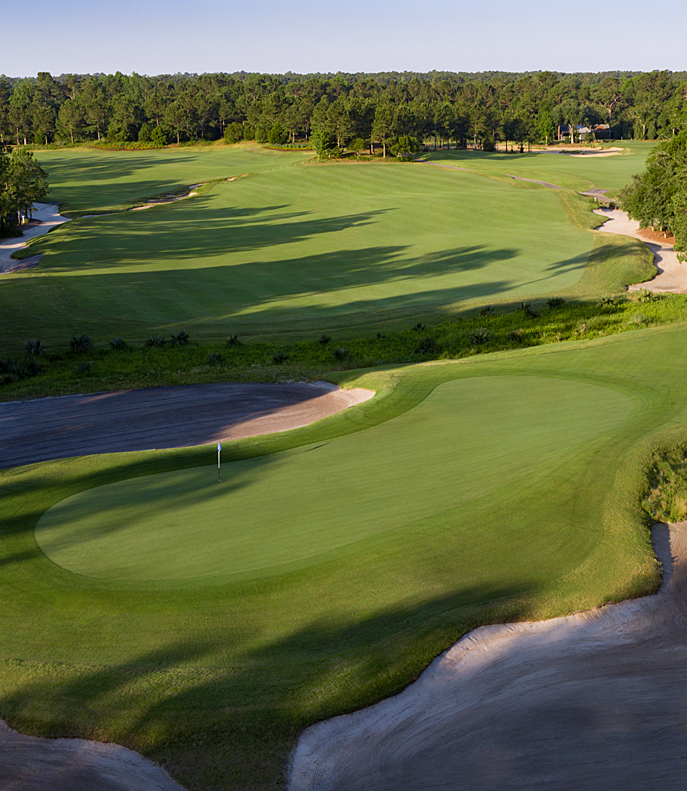
Going into our round, we expected the green complexes to be one of the Dye Course’s biggest challenges, and they certainly didn’t disappoint. What stood out was the variety in their size, shape and difficulty.
Some greens are relatively small, others are much larger, and several are noticeably longer from front to back than they are wide. That makes choosing the correct club especially important.
Finding the putting surface is only part of the challenge. Leaving yourself in the wrong position can turn what appears to be a straightforward two-putt into something much more complicated.
Miss a green on the wrong side, particularly when short-sided, and Dye makes you work to save par.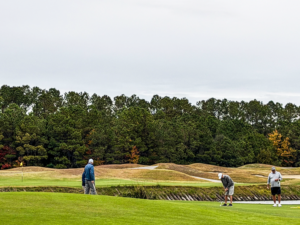
There are closely mown areas, slopes and elevated putting surfaces that require creativity and a good short game. It’s the kind of course where your approach shot deserves just as much attention as your tee shot, if not more.
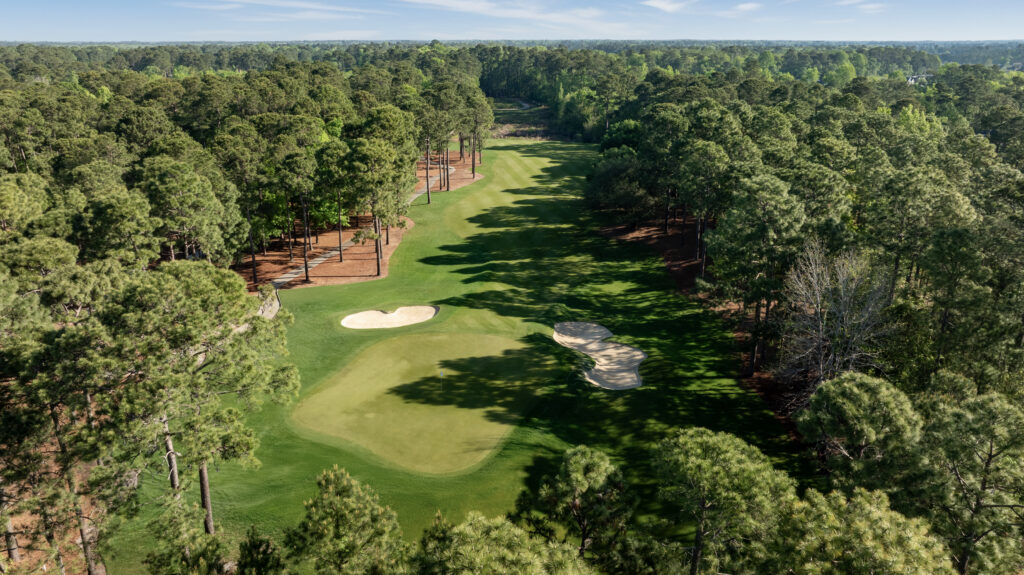
The bunkering is also visually impressive. There are plenty of bunkers throughout the layout, but we found that many served to frame the holes rather than consistently coming into play from the tees we played.
While we found the course more forgiving off the tee than anticipated, the green complexes delivered exactly the kind of challenge we’d expect from a Pete Dye design.
Two Holes That Really Got Our Attention
The par-4 10th is a good example of how Dye can create difficulty without relying on length.
Playing just 287 yards from the white tees, it’s one of the shortest par-4s on the course. But the approach is anything but automatic.
The green is elevated and somewhat obscured from the fairway, making it difficult to see exactly where your ball needs to finish. Come up short, and there’s a good chance your ball will roll back down the slope, leaving a delicate recovery shot to a putting surface you may not be able to see.
It’s a clever design that rewards precision rather than power.
Then there’s the par-3 15th.
At 167 yards from the white tees, it was arguably the most demanding hole we encountered during our round, especially with the wind blowing directly into us.
The green stretches noticeably from front to back, making distance control critical. Miss in the wrong spot, and you’re facing a difficult up-and-down. Even finding the green doesn’t guarantee an easy par, as a lengthy putt can quickly turn into three.
It’s a hole that perfectly illustrates why the Dye Course can be so challenging despite its relatively modest yardage from the forward sets of tees.
A Different Look and Feel for Myrtle Beach Golf
Beyond the golf itself, one of the things we enjoyed most was the setting.
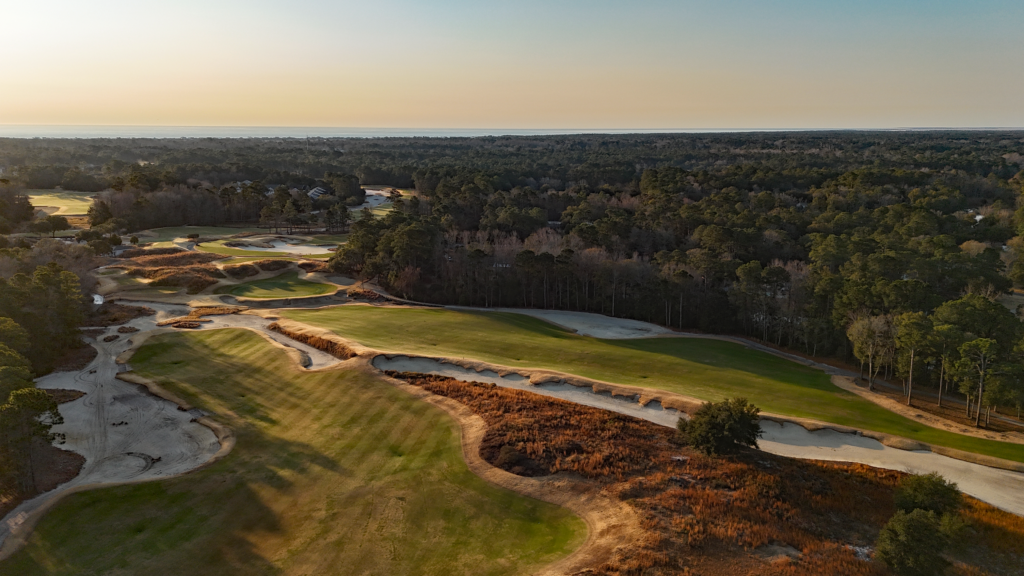
We played on an overcast fall day, and the contrast between the dormant grasses and the surrounding landscape created a scene that felt almost Scottish in places.
The dramatic bunkering and natural surroundings gave the course a distinctive look, especially under the gray skies.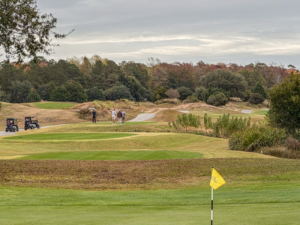
At times, it hardly felt like we were playing golf in Myrtle Beach.
There’s a secluded quality to the property that adds to the experience. Rather than feeling surrounded by the activity of a busy resort destination, we often felt like we were playing somewhere tucked away from everything else.
That atmosphere was one of the unexpected highlights of the day.
The clubhouse also made a strong impression. It has an understated, almost private-club feel that complements the golf course nicely. Comfortable and welcoming, it’s a fitting introduction to the experience.
Our Biggest Takeaway?
Don’t let the Dye Course’s reputation intimidate you. Choose the tees that best fit your game, keeping in mind that yardage doesn’t tell the whole story. Pay attention to the course rating and slope from each set of tees, enjoy the opportunities the course gives you from the fairway, and be prepared to think your way around the green complexes.
That’s where Pete Dye’s design really shines.
Barefoot Resort Dye Course – Tee Yardages, Ratings & Slopes
The Dye Course at Barefoot Resort is a par-72 layout offering five sets of tees to accommodate golfers of varying skill levels.
Platinum Tees: 7,314 yards | Rating: 75.6 | Slope: 149
Black Tees: 6,622 yards | Rating: 72.4 | Slope: 143
White Tees: 6,064 yards | Men’s Rating/Slope: 70.0/132 | Women’s: 76.6/138
Green Tees: 5,420 yards | Men’s Rating/Slope: 66.7/123 | Women’s: 73.1/130
Gold Tees: 4,977 yards | Men’s Rating/Slope: 64.6/113 | Women’s: 70.3/125
Photos captured from our round that day and shared on our Instagram Account MyrtleBeachGolfTrips